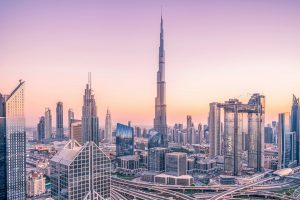
A decade ago, technology founders looking at the Middle East tended to see Dubai as a market opportunity. Increasingly, they’re seeing it as somewhere to put down roots.
The city has put serious effort into building conditions where technology businesses can launch, grow and reach international markets without friction. That appeal stretches across sectors including AI, fintech, SaaS, software development and IT consulting, and it’s drawn companies that want a stable base without sacrificing global connectivity.
AI companies made up a notable share of newly registered digital businesses in Dubai in 2025, part of a broader expansion in the emirate’s digital economy. Government-backed initiatives, active investor interest and an ongoing influx of international talent have all played a role in consolidating Dubai’s position among the region’s top technology hubs.
Why Dubai is a leading destination for technology businesses
Among the many benefits of doing business in Dubai, the biggest drawcard, for many founders, is arguably the free zone model.
Free zones let foreign entrepreneurs set up companies with full ownership, operate within a favourable tax environment, and work through a relatively straightforward formation process.
Beyond the structural benefits, they offer something harder to quantify: access to business communities organised around specific industries and growth sectors.
For a technology company, the choice of free zone can shape a surprising range of outcomes, from operating costs and banking relationships to the calibre of your network and the ease of future expansion.
So the question any new business should be asking itself is which free zone best fits what they’re trying to build.
What to look for when choosing a free zone for your tech business
Founders often begin their search by comparing setup costs, but that’s rarely the best place to start.
A cheaper licence can save money in the short term, but if it limits your ability to grow, hire staff, or access the right business network, those initial savings can disappear quickly.
A better approach is to work backwards from your business model.
The first consideration should be your intended activities. Technology is a broad category, and different free zones offer different licensing options. Some are particularly strong for software development and IT consultancy, while others cater to fintech businesses, AI startups, blockchain ventures, hardware companies or research-focused organisations.
Growth plans matter too.
A solo founder launching a SaaS product may only need a basic licence and a small number of visas. A technology company expecting rapid expansion will need a structure that can accommodate a growing team without creating unnecessary complications later.
Office requirements are another factor. Some businesses are perfectly comfortable operating remotely or from flexible workspace solutions. Others may need dedicated offices, facilities for R&D or collaborative environments for teams.
Less obvious considerations include banking support and access to the local business community. Some free zones have long-established relationships with banks and service providers, while others offer stronger networking opportunities through events, accelerators and industry partnerships. Each zone has its own set of strengths.
Most importantly, remember that there isn’t a universally “best” free zone. The right choice for an AI startup raising investment is unlikely to be the same as the right choice for an independent IT consultant serving clients across the UAE.
Dubai Internet City (DIC)
If you’re looking for the free zone most closely associated with Dubai’s technology sector, Dubai Internet City is usually the first name that comes up.
For more than twenty years, it has served as a home for multinational technology companies, regional innovators and ambitious startups. That longevity has given DIC something that newer free zones are still working towards: a deeply established technology ecosystem.
There’s a noticeable difference when you’re surrounded by businesses facing similar opportunities and challenges. Potential clients, partners, investors and talent are often already part of the community.
That’s one of the biggest reasons companies choose DIC. They’re not simply buying a licence; they’re buying proximity to a network.
The trade-off, naturally, is cost. Dubai Internet City isn’t typically the most budget-friendly option available, and many founders decide that other free zones offer better value during the earliest stages of growth. But for businesses that see credibility, visibility and connections as strategic assets, DIC continues to hold strong appeal.
Who DIC is best suited for
Dubai Internet City is often a good fit for established software companies, scaling SaaS businesses, regional headquarters, AI ventures and technology firms that want to position themselves within one of the Middle East’s most recognised digital business communities.
Dubai Silicon Oasis (DSO)
DSO tends to attract a different kind of founder than DIC.
Where DIC draws companies chasing ecosystem prestige and high-profile neighbours, DSO is more commonly chosen by entrepreneurs who want genuine value from a technology-focused environment without the premium price tag that comes with Dubai’s more celebrated addresses.
Originally built as a technology park, DSO has grown into a working business community spanning startups, engineering firms, software developers and innovation-driven organisations. The setup is practical rather than glossy, and for many founders that’s the point.
Costs sit at a more accessible level than some of Dubai’s flagship free zones, yet the environment is unambiguously tech-oriented. And unlike some free zones where early-stage companies quickly feel hemmed in, DSO gives businesses room to scale — you’re not forced into a different structure the moment you add a few hires or expand your offering.
For startups watching their budgets closely while still wanting to operate inside a credible technology ecosystem, DSO is hard to overlook.
Who is DSO best suited for
DSO is particularly attractive to early-stage startups, software developers, AI businesses, hardware-focused companies and entrepreneurs looking for a cost-effective foundation for future growth.
Dubai Multi Commodities Centre (DMCC)
At first glance, DMCC might seem like an unusual choice for a technology business.
After all, the name itself suggests a focus on commodities rather than software, digital platforms or emerging technologies.
Yet DMCC has become one of Dubai’s most popular free zones across a wide range of industries, including technology.
The reason is flexibility.
Unlike some specialist free zones that focus on a particular sector, DMCC accommodates a broad range of business activities. This allows technology companies to operate within a highly regarded business district without being restricted by a narrow industry focus.
The location is another drawcard. Based in Jumeirah Lakes Towers, DMCC offers access to a large and diverse business community, making it attractive to companies that value networking opportunities and a prestigious commercial address.
For many technology businesses, DMCC sits in the middle ground: more flexible than highly specialised technology zones, but still highly respected within Dubai’s business landscape.
Who DMCC is best suited for
DMCC is a strong choice for technology consultancies, software businesses, blockchain companies and international firms that want flexibility alongside a well-established business address.
Dubai International Financial Centre (DIFC) Innovation Hub
Not every technology company needs DIFC, but for those that do, the case is fairly straightforward.
The DIFC Innovation Hub has built a genuine concentration of fintech activity, bringing together founders, investors, accelerators, financial institutions and technology specialists in a way that’s hard to find elsewhere in the region. Proximity to the right people — potential backers, enterprise clients, and regulatory contacts — tends to produce opportunities that don’t emerge from a directory listing or a cold email.
For fintech businesses specifically, there’s an additional layer of value. DIFC operates under its own internationally recognised legal and regulatory framework, which carries weight when you’re in conversations with institutional investors, banking partners or cross-border clients who want to know the rules of engagement before they commit.
The trade-off is cost. DIFC is pitched at companies with serious growth ambitions, not founders hunting for the cheapest route to incorporation. Setup and operating costs reflect that positioning.
For businesses working at the intersection of technology and finance, though, it tends to justify the premium, and for many in that space, it remains the most compelling address in Dubai.
Who DIFC is best suited for
DIFC Innovation Hub is particularly suited to fintech startups, regtech companies, AI businesses serving the financial sector and technology ventures actively seeking investor engagement.
International Free Zone Authority (IFZA)
IFZA’s growth over the past few years has been hard to miss. It’s become one of Dubai’s most popular formation destinations, particularly among entrepreneurs who prioritise flexibility and cost-efficiency over sector-specific prestige. Part of the appeal is structural: unlike free zones built around particular industries, IFZA takes a broader approach, offering a wide range of activities and licence configurations that can accommodate businesses whose focus shifts as they grow.
The formation process is also notably straightforward, a genuine consideration for founders who want to get operational without months of administrative friction.
What IFZA doesn’t offer is the kind of concentrated industry ecosystem you’d find at DIC or DIFC. For many technology founders, that’s a conscious trade-off rather than a shortcoming. If your priority is lean setup costs and room to adapt, the absence of a curated tech community is unlikely to be a dealbreaker.
Who IFZA is best suited for
IFZA works particularly well for startup founders, independent IT consultants, SaaS businesses, digital service providers and entrepreneurs seeking an efficient and cost-conscious setup solution.
Meydan Free Zone
Meydan has carved out a clear identity as a place for fast setup, minimal friction, and a formation process that leans heavily on digital infrastructure to cut out unnecessary administration.
For founders who’ve dealt with drawn-out bureaucratic processes elsewhere, that’s a compelling selling point. Much of the company formation process can be completed quickly and without the back-and-forth that slows things down in more traditional setups.
That efficiency has helped Meydan pull in businesses across a range of sectors, technology included. It isn’t the obvious choice for founders who want deep industry specialisation or a curated ecosystem of sector peers. What it does offer is a clean, low-overhead route into the UAE market which, depending on where you are in your business journey, can mean a lot to founders who value smooth, hassle-free setup.
For early-stage companies focused on getting established and moving fast, Meydan is worth a serious look.
Who Meydan is best suited for
Meydan Free Zone is often a good fit for early-stage technology startups, software developers, freelancers, IT consultants and founders who prioritise speed, flexibility and ease of setup.
How to choose the right tech free zone for your business
After researching Dubai’s free zones, many founders find themselves asking the same question: “So which one should I choose?”
It depends less on the free zone and more on the business.
A fintech startup looking for investor access will have very different priorities from a software company focused on keeping costs low during its first year. Likewise, an established technology business opening a regional headquarters may place greater value on reputation and networking opportunities than a founder launching a new SaaS platform.
If you’re seeking an established technology ecosystem, Dubai Internet City remains one of the strongest options available.
If affordability and scalability are your priorities, Dubai Silicon Oasis is worth serious consideration.
Businesses looking for flexibility often gravitate towards DMCC, IFZA or Meydan, while fintech and innovation-led companies frequently find themselves drawn to DIFC.
The key is to look beyond the licence fee and evaluate how well each free zone aligns with your long-term goals. Choosing the right structure at the outset can make future growth considerably easier.
About Creative Zone
Every year, hundreds of companies have to decide exactly which free zone will work best for them. Which has the right structures, and which will provide them with the right connections. It isn’t a decision they take lightly. It also isn’t a decision they need to make alone. Creative Zone has helped thousands of entrepreneurs establish and grow businesses in the UAE.
As specialists in technology business setup in Dubai, we understand the requirements of each free zone, the relevant regulations, and how best to set a business up for success. The team works closely with founders to understand exactly what they want from their business, how they want to scale and who they want to reach.
From company formation and licensing through to banking support, visa processing and ongoing business services, Creative Zone helps simplify the process so entrepreneurs can focus on building their business with confidence.
Frequently asked questions about free zones for technology businesses in Dubai
Which free zone is best for a tech startup in Dubai?
Depends entirely on your business type and ambitions. Every startup has different priorities. Founders prioritising affordability often look at Dubai Silicon Oasis, IFZA or Meydan, while those wanting a stronger technology ecosystem may prefer Dubai Internet City. Look at your business model, growth plans and budget, and decide which zone gives you what you need.
Can a technology business in a Dubai free zone sell to UAE mainland clients?
Yes. Free zone companies can provide products and services to mainland clients but there may be additional requirements depending on your type of business and operating structure. Get yourself professional advice and you won’t go wrong.
What licences do technology companies need in Dubai?
Licenses cover a wide range of activities. From software development, IT consultancy, SaaS platforms, AI services, blockchain activities, digital solutions and technology support services, there’s a licence to cover it. The exact licence required depends on the nature of the business.
How much does it cost to set up a tech business in a Dubai free zone?
Different free zones have different costs and different requirements, and they vary according to licence type, visa requirements, office package and more. Entry-level packages are generally more affordable in free zones such as IFZA, Meydan and DSO, while premium locations like DIC and DIFC can involve higher setup costs.