If you’ve ever watched a Dubai construction site and wondered where all those cranes and excavators come from, chances are most of them aren’t owned outright by the contractor using them. They’re rented. And that’s the business this guide is about: getting licensed to rent out equipment in one of the busiest construction and infrastructure markets in the world.
Whether you’re eyeing heavy machinery for building sites, security kit for events, or medical equipment for clinics, the path to a rental licence in Dubai follows a relatively predictable route. Here’s what that route looks like in 2026.
What is an equipment rental licence in Dubai?
An equipment rental licence is a commercial trade licence that lets you lease, rent, or hire out equipment to other businesses or individuals, rather than sell it to them outright. You’ll get it from either the Department of Economy and Tourism (DET) if you’re setting up on the mainland, or a free zone authority if that’s the route you choose.
The exact activity code you register under depends on what you’re renting. Construction machinery, security equipment, and medical equipment all sit under different codes, so this isn’t a one-size-fits-all licence. Construction and heavy machinery, for instance, falls under Activity Code 7730.76, part of ISIC Division 77 covering rental and leasing activities more broadly. Security equipment rental has its own code, 7730.94, with its own set of approvals attached.
What ties all of these together is the underlying model. You’re not selling assets, you’re renting them out on short- or medium-term contracts and generating revenue from repeat use of the same equipment. That places the whole business within the broader “rental and leasing of machinery and equipment” classification under the DET.
Types of equipment you can rent under the licence
This licence isn’t limited to one category of equipment. Depending on which activity codes you register, you could be renting out:
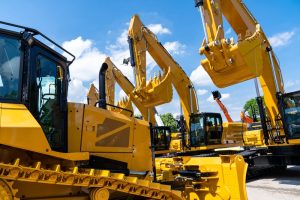
Construction and heavy machinery – excavators, cranes, bulldozers, compactors, concrete mixers, scaffolding and other equipment used for construction, infrastructure and civil engineering projects.
Security equipment – CCTV systems, access control systems, alarm systems, surveillance cameras, metal detectors and related security technology.
Medical equipment – diagnostic, monitoring and therapeutic equipment such as patient monitors, ultrasound machines, hospital beds, wheelchairs, ventilators and rehabilitation equipment.
Furniture – office furniture, event furniture, exhibition furnishings, seating, desks, conference tables, storage units and temporary fit-out furniture.
Transport-related equipment – refrigerated trucks, trailers, specialised commercial vehicles, cargo handling equipment and other transport solutions for logistics and distribution.
You’re not restricted to just one of these. Most businesses can register several related rental activities under a single licence, typically up to around ten related activities, which gives you room to diversify without applying for a brand-new licence every time you add a category.
Before you commit to a category, bear in mind that some of them come with extra approvals attached. Renting out security equipment means you’ll need sign-off from SIRA (the Security Industry Regulatory Agency) or Dubai Police, depending on what you’re leasing. Anything wheeled or motorised, like cranes or oversized machinery being transported on Dubai’s roads, will bring the Roads and Transport Authority (RTA) into the picture too. It’s worth mapping these out early, since they can add time to your setup that a straightforward office-based licence wouldn’t need.
Who should apply for an equipment rental licence?
This route makes sense for entrepreneurs and companies planning to rent out physical equipment rather than sell it, with clients that typically include construction firms, events companies, hospitality operators, logistics hubs, and healthcare providers.
In practice, you’ll usually see two kinds of operators here. There’s the asset-light rental business that builds a fleet and rents it out broadly to contractors and developers across multiple projects. And then there’s the specialised operator who sticks to one lane, say, security equipment for events, or medical equipment for clinics, and builds deep expertise and client relationships within that niche.
Either way, this is a model well suited to investors who want exposure to Dubai’s construction boom without necessarily building or developing anything themselves. As long as active build programmes and short-term infrastructure projects keep landing across the emirate, demand for rental equipment tends to hold steady rather than swing wildly with any single project’s timeline.
It’s also a business that suits people coming from a few different backgrounds. Some founders are already in construction or facilities management and see rental as a natural extension of relationships they’ve already built with contractors. Others come at it purely as investors, buying into a fleet and outsourcing the day-to-day operational side. And a smaller group specialise from day one, going deep into something like medical equipment rental for clinics and hospitals, where the client relationships and compliance requirements look quite different from a construction-focused operation. None of these approaches is inherently better than the others, it really comes down to what you already know, what capital you’re working with, and how hands-on you want to be with fleet management and maintenance.
Steps to get an equipment rental licence in Dubai
At a high level, the process involves picking your jurisdiction, choosing your activities, reserving a trade name, submitting your application, and waiting for the licence to be issued. Here’s how each step plays out.
1. Confirm your activity code(s). Check DET’s activity list, or the equivalent list from your chosen free zone, and make sure the code matches what you’re planning to rent out. Operating outside your registered scope, say, moving into equipment sales or repair without the right code, can create compliance issues down the line and affect your licence renewal.
2. Choose your legal structure. Most equipment rental businesses register as an LLC, since it protects personal assets and works well for multiple shareholders.
3. Reserve your trade name. Submit a shortlist in order of preference through the DET portal or your free zone’s equivalent system.
4. Submit your documentation and pay the relevant fees.
5. Secure any additional regulatory approvals your equipment category needs. This is where SIRA, Dubai Police, or RTA approvals come in, depending on what you’re renting. If your equipment needs sign-off from one of these bodies, it’s worth starting that process in parallel with your trade licence application rather than waiting for the licence to land first.
A mainland setup typically takes 2 – 4 weeks from start to finish, depending on how complete your documents are and whether any of those extra approvals are needed. Free zone approvals can move faster, sometimes considerably so, since there’s usually one authority to deal with rather than several.
Required documents
Before your licence can be issued, you’ll need to have the following ready:
- Passport copies of all shareholders, plus Emirates ID where applicable
- A No Objection Certificate, where relevant to your situation
- Memorandum of Association, if you have more than one shareholder
- Proof of a registered office or warehouse/yard address, with the lease agreement Ejari-attested
- A signed rental agreement template for your equipment
When it comes to the warehouse or yard, it’s important to remember that equipment rental businesses, especially anything dealing with construction machinery, usually need a dedicated space to store and maintain their fleet. That’s a different requirement from a standard office-based licence, and it’s easy to underestimate the space this takes once you’re storing cranes or compactors rather than filing cabinets.
Once you’ve got your licence in hand, you’ll also want it ready for the bank. Opening a corporate account means the bank will ask for your licence, your MoA, and a business plan, so it’s worth having those in order before you start account-opening conversations.
Cost of an equipment rental licence in Dubai
The trade licence itself typically runs between AED 10,000 and AED 15,000, though where you land in that range depends on your jurisdiction, your legal structure, and how many activities you’re registering under one licence.
That’s just the licence fee, though. On top of it, you’re looking at:
- Trade name reservation fees
- Initial approval fees
- Office or warehouse rent
- Visa costs
- Any sector-specific approval fees (SIRA, RTA, and so on, if they apply to your equipment category)
Once you add all of that up, along with office setup and professional fees, total first-year costs generally land somewhere between AED 40,000 and AED 80,000. The range is wide because the exact figure depends heavily on your specific activity mix, your jurisdiction, and how much space your fleet needs. It’s worth getting a tailored quote once you know your activity codes rather than budgeting off a single number.
Mainland vs free zone: which is better?
There’s no universally right answer here. It comes down to who your clients are and how you plan to operate.
A mainland licence lets you trade with clients anywhere in the UAE without restriction. If you’re planning to serve contractors and developers across multiple emirates, or you want the door open to government infrastructure tenders down the line, mainland is generally the stronger fit. It also means running an office on Ejari terms, and if you’re hiring, you’ll need to factor in MOHRE registration and Emiratisation quotas, ongoing obligations that free zone operators typically don’t carry.
A free zone licence offers 100% foreign ownership, a faster and simpler setup, and lower initial overhead. The catch is that direct mainland trading is generally restricted unless you bring in a distributor or set up a separate mainland presence alongside it.
Regardless of which route you pick, VAT registration becomes mandatory once your annual turnover crosses AED 375,000, and equipment rental businesses working with large contractors on high-value machinery often reach that threshold faster than they expect. It’s worth planning your VAT compliance from day one rather than treating it as a later problem.
There’s a practical way to think about the choice that goes beyond ownership percentages and setup speed. If most of your rental contracts will come from repeat, on-the-ground relationships with contractors and developers who need equipment delivered to sites across Dubai and beyond, mainland gives you room to grow into that without hitting a jurisdictional wall later.
If you’re starting smaller, testing demand in a specific equipment category, or working primarily with private-sector clients who come to you rather than the other way around, a free zone lets you get to market faster and keep early costs down while you find out what sells. Plenty of operators start in a free zone and move to mainland once their client base and fleet have grown enough to justify it, so the decision isn’t necessarily permanent.
About Creative Zone
Working through jurisdiction decisions, activity codes, and the paperwork that comes with an equipment rental licence in Dubai is a lot to navigate alone, particularly if sector-specific approvals are part of the mix. Creative Zone works with entrepreneurs to help pin down the right activities for your business, pull together the required documentation, and get the application through to submission without the usual back-and-forth. If you’re weighing up mainland against free zone, or you’re not sure which activity codes cover what you plan to rent, that’s exactly the kind of decision we help you work through before you commit.
Frequently asked questions about equipment rental licence Dubai
How much does an equipment rental licence cost in Dubai?
The licence itself typically costs between AED 10,000 and AED 15,000, though the figure shifts depending on your jurisdiction and how many activities you register. Once you add office or warehouse costs, visas, and any sector-specific approvals, total first-year setup costs usually fall between AED 40,000 and AED 80,000.
Can a foreigner own 100% of an equipment rental business in Dubai?
Yes. Since the 2021 amendments to the UAE Commercial Companies Law, 100% foreign ownership is available on the mainland for most commercial activities, removing the earlier requirement for a local Emirati partner. Free zones have offered full foreign ownership as standard for longer, alongside a typically faster setup process.
Do I need a warehouse or yard for an equipment rental business?
In most cases, yes, particularly if you’re renting construction or heavy machinery. You’ll need somewhere to store and maintain your fleet, and that lease has to be Ejari-attested like any other commercial tenancy in Dubai. Smaller categories of equipment may need less space, but a storage and maintenance facility is standard practice across the sector.
How long does it take to get an equipment rental licence in Dubai?
A mainland setup usually takes 2 – 4 weeks, depending on how complete your documentation is and whether your equipment category needs additional approvals from bodies like SIRA or the RTA. Free zone licences can often move faster, since there’s typically a single authority handling the whole process.